Septic tank pumping
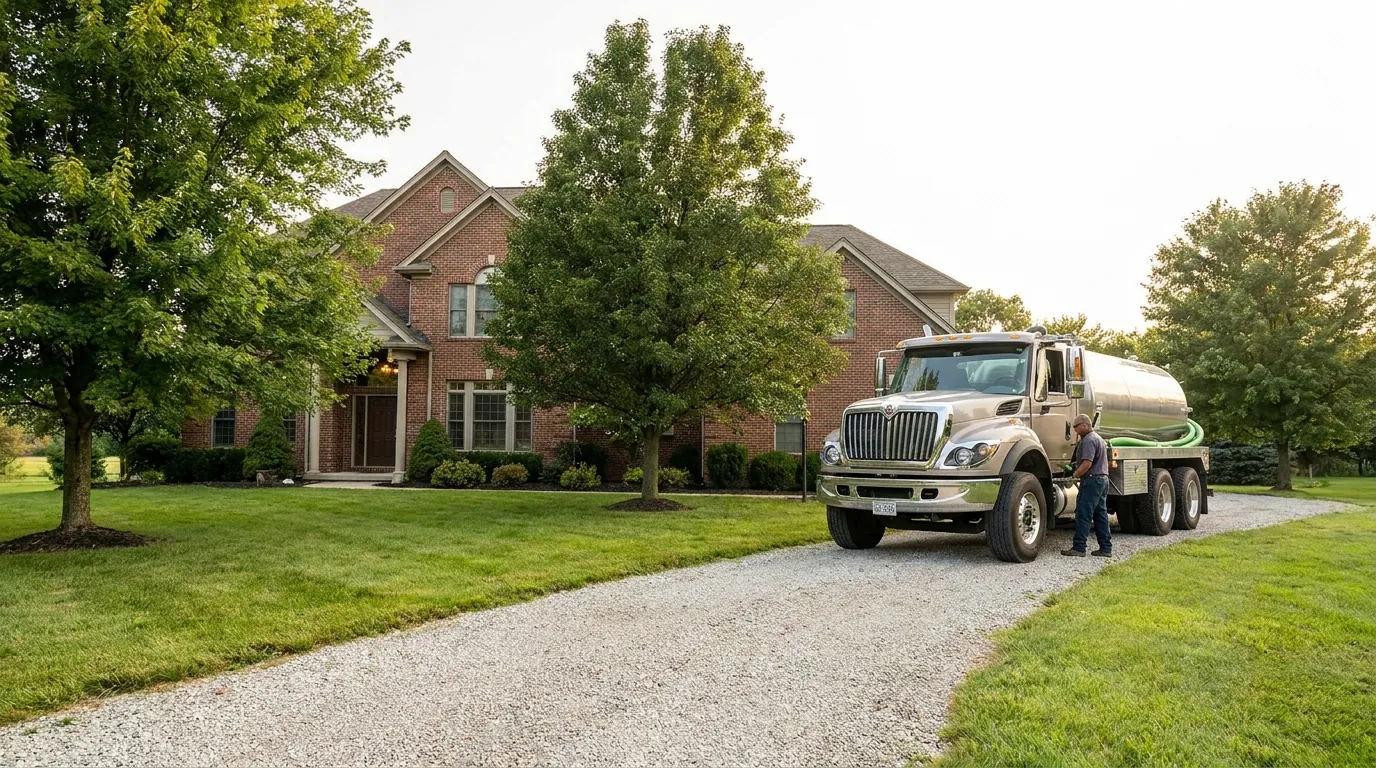
Scheduled removal of accumulated sludge and scum so solids never reach your drain field. The core service most homes need every few years.
Carmel Septic Pros
Pumping, cleaning, inspection, and drain field service for homes across Carmel and Hamilton County.
Serving Carmel, IN and the surrounding area.
If your home in Carmel or the surrounding Hamilton and Boone County towns runs on a septic system, the ground under your yard has more to do with your maintenance schedule than most homeowners realize. Central Indiana sits on heavy clay-loam soil that drains slowly, and slow-draining soil means the drain field can only accept effluent so fast. When a tank isn't pumped on time, solids carry into that field and the whole system starts to back up — a problem the local clay makes worse, not better.
Carmel Septic Pros focuses on the full residential septic cycle: routine pumping, tank cleaning, system inspections for peace of mind or a home sale, drain field troubleshooting, grease trap service, and urgent help when a system fails. We write our recommendations around what we actually find in the tank and the yard, not a one-size schedule pulled from a national chart.
This site explains how each service works, what warning signs to watch for, and how Carmel's freeze-thaw winters and wet springs change the timing. If you're not sure whether your tank needs attention yet, the pages on septic tank pumping and septic system inspection are a good place to start.
Septic systems live and die by percolation — how fast the surrounding soil accepts water. Carmel's clay-loam holds moisture and drains slowly, so drain fields here have less margin for error than sandy ground would give them. A tank that goes too long between pump-outs sends suspended solids into the field, and once clay pores clog, they are slow and expensive to recover.
Spring is the pressure test. Central Indiana springs are wet, and a high seasonal water table can rise into the drain field, leaving less room for your own wastewater to disperse. During those weeks, systems that seemed fine all winter suddenly show slow drains or standing water over the field. That's why we often suggest timing pumping for late summer or fall, when the ground is drier and the tank starts the wet season with maximum capacity.
Winter adds freeze-thaw. When the top layer of soil freezes and thaws repeatedly, it can shift pipe joints and compact the ground over the field. Snow cover actually helps by insulating the system, while bare, plowed, or heavily driven-over ground freezes deeper and can slow bacterial activity in the tank. Understanding these swings is the difference between reacting to a backup and preventing one — see our guidance on septic care during heavy rain for the wettest months.
Every service below is scoped to residential systems in Carmel and nearby towns. Ask us which ones your system needs based on age, household size, and last service date.
Scheduled removal of accumulated sludge and scum so solids never reach your drain field. The core service most homes need every few years.
A full look at tank levels, baffles, and drain field performance — useful before a home sale or when something seems off.
More thorough than a routine pump-out: we remove hardened sludge layers and rinse the tank so it starts the next cycle clean.
Diagnosis and treatment when soggy ground, odors, or slow drains point to a struggling field rather than a full tank.
Pumping and cleaning for grease interceptors so fats and oils don't clog lines or reach the septic system.
Help when sewage is backing up, the tank is overflowing, or a system fails after heavy rain.
We serve Carmel and the surrounding communities across Hamilton and Boone counties. Choose your town to learn how local conditions affect your system.
Most households land on every three to five years, but Carmel's slow-draining clay-loam soil and household size push some homes to the shorter end. A quick check of the sludge level tells us exactly where yours stands.
Slow drains throughout the house, gurgling in toilets, odors near the tank or drain field, and lush or soggy grass over the field are the common early signs. Any one of them is worth a call before it becomes a backup.
Central Indiana springs are wet and the water table rises, which leaves less room in the soil to absorb your wastewater. Systems that coped all winter can suddenly show slow drains or standing water, so we often pump before the wet season.
Yes. We work throughout Carmel and nearby communities including Westfield, Noblesville, Zionsville, Fishers, Lawrence, and Whitestown.
Yes. Our inspection covers tank levels, baffles, and drain field performance so you understand the system's condition before closing. See the septic system inspection page for what's included.
If it's been more than a few years — or you can't remember at all — that's usually the signal to schedule. Reach out and tell us your tank size, household size, and last service date, and we'll help you decide what's due.
Serving Carmel and nearby Hamilton and Boone County towns.
Practical answers to the questions we hear most in Carmel, IN.
What influences septic tank pumping cost in Carmel, from tank size to access and buildup. A plain-language guide to budgeting for pumping near you.
How often should you pump a septic tank in Carmel? Learn the factors that set your schedule, from household size to clay soil and wet springs.
Learn the warning signs of a full septic tank in Carmel, from slow drains to odors and soggy yards, and what to do before a backup happens.