Septic Emergency Service in Carmel, IN
Septic emergency service in Carmel, IN. Fast response for backups, overflows, and sewage odors before they spread through your home or yard.
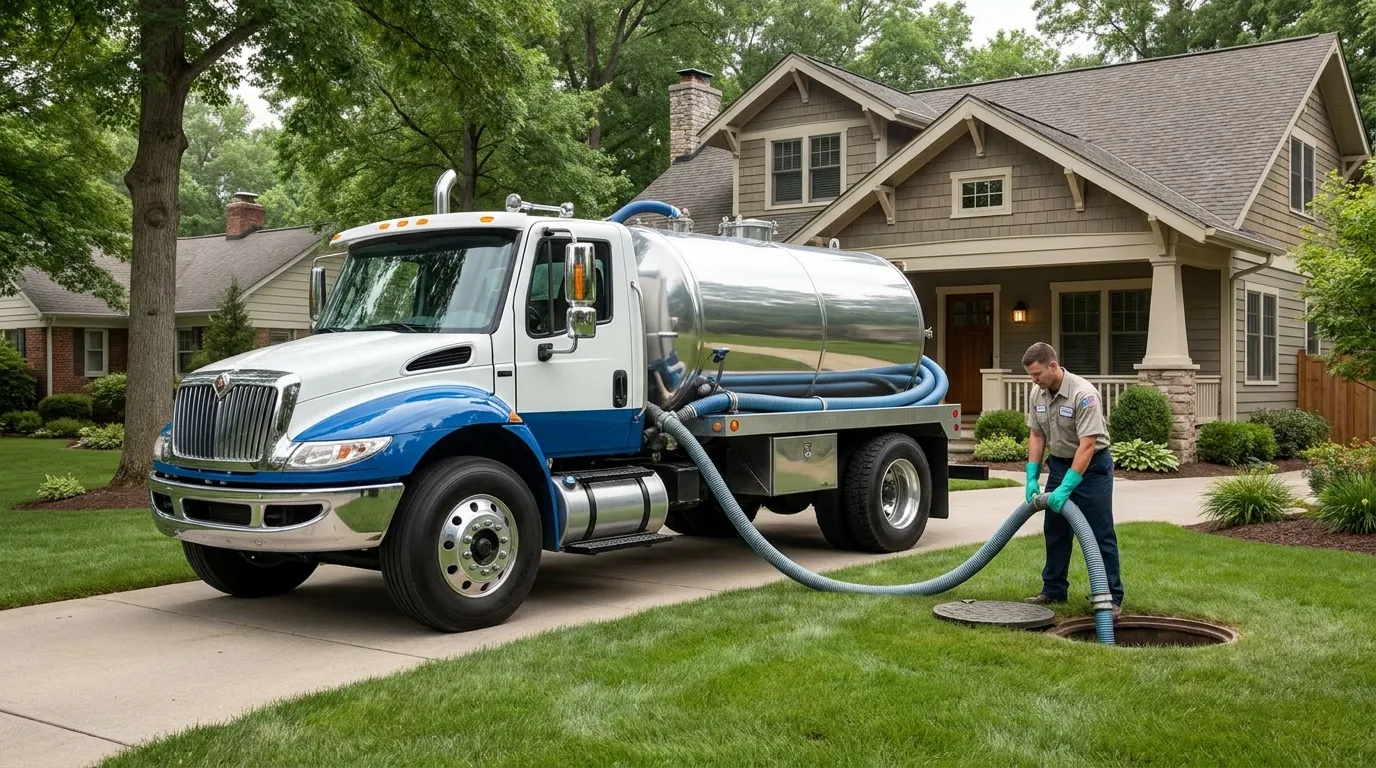
When it can't wait
Some septic problems can be scheduled. Others can't. Sewage backing up into a tub or floor drain, an overflowing tank, strong sewage odors inside the house, or drains that have all stopped at once are emergencies — they get worse fast and can cause real damage to your home. Septic emergency service exists for exactly these moments, when the priority is stopping the problem and protecting your property before figuring out the long-term fix.
When you call, it helps to tell us what you're seeing: where the backup is, whether it's every drain or just one, when the tank was last pumped, and whether the ground outside is wet or frozen. That gives us a head start on the likely cause before we arrive.
Many emergencies trace back to a tank that was overdue — which is why staying current on septic tank pumping prevents most of them. Once the immediate crisis is handled, we often follow up with a septic system inspection to find out what failed.
How we handle an emergency
When we respond to a septic emergency in Carmel, we work in this order.
-
Stop the immediate problem
First priority is halting the backup or overflow so sewage stops entering your home or spreading across the yard.
-
Pump to relieve pressure
If the tank is full or overflowing, we pump it down to take the immediate pressure off the system and the house.
-
Find the cause
We check the tank, baffles, and lines to determine whether it's a full tank, a blockage, a saturated field, or a frozen line.
-
Get you functional
We restore basic use where we safely can, so your household isn't left without working drains.
-
Plan the real fix
We explain what caused the failure and what needs to happen next so the same emergency doesn't repeat.
Carmel's emergency triggers
Two local conditions cause a disproportionate share of septic emergencies in Carmel. The first is wet weather. During heavy spring rains, clay-loam soil saturates and the drain field stops accepting flow, which pushes liquid back toward the tank and house. A system that was borderline suddenly backs up. Reducing water use during these stretches genuinely helps — our guide to septic care during heavy rain in Carmel explains what to do.
The second is winter. Freeze-thaw cycles can freeze shallow pipes and heave components, and a tank that was already near capacity has no room to absorb the stress. That combination produces cold-snap backups. Going into winter with a recently pumped tank is the best insurance, but when an emergency does hit, the sooner you call, the less damage there is to clean up.
Facing a septic emergency?
If sewage is backing up or your tank is overflowing, don't wait — the sooner we're on it, the less damage it causes.
Emergency response across Carmel and nearby Hamilton and Boone County towns.
Frequently asked questions
What counts as a septic emergency?
Sewage backing up into the house, an overflowing tank, strong indoor sewage odors, or all drains stopping at once. These get worse quickly and can damage your home, so they shouldn't wait for a scheduled appointment.
What should I do while I wait for help?
Stop running water and using drains to avoid adding to the backup, keep people and pets away from any sewage, and note when the tank was last pumped. That information helps us diagnose the cause faster when we arrive.
Why do backups happen after heavy rain?
Carmel's clay-loam soil saturates during wet springs, and a saturated drain field can't accept flow, so liquid backs up toward the tank and house. Cutting water use during these periods eases the pressure on a struggling system.
Can I prevent septic emergencies?
Most are preventable with regular pumping and inspection so the tank never runs overfull, plus reduced water use during wet weather. Going into winter with a recently pumped tank also lowers the odds of a cold-snap backup.