Grease Trap Pumping in Carmel, IN
Grease trap pumping in Carmel, IN. We keep restaurant and commercial kitchen grease interceptors clean so they drain properly and stay compliant.
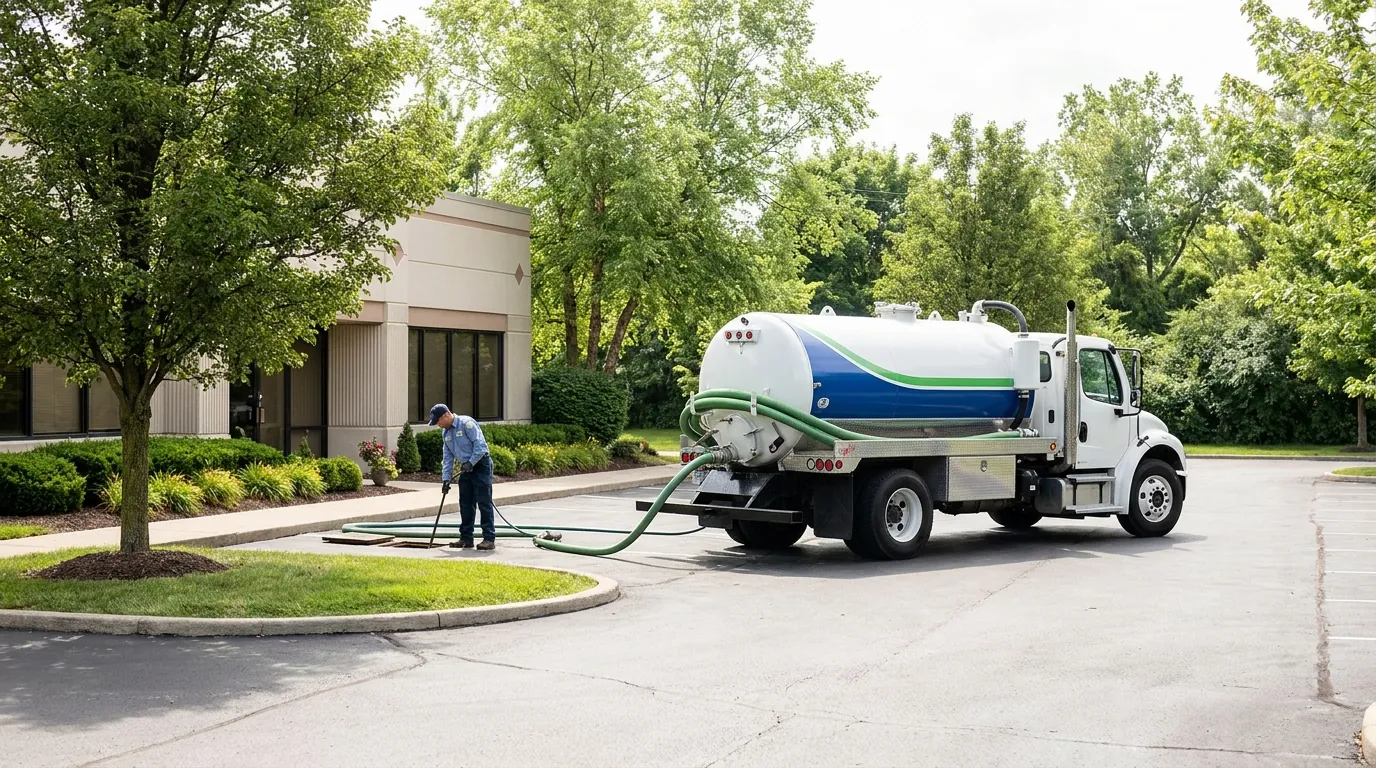
Why grease traps need regular service
A grease trap — or grease interceptor — catches the fats, oils, and grease that a commercial kitchen produces before they reach the sewer or septic system. Left alone, that grease hardens, fills the trap, and eventually pushes downstream where it clogs lines and causes backups at the worst possible moment during service. Regular grease trap pumping keeps the trap doing its job and keeps your kitchen running.
This service is for restaurants, cafés, commercial kitchens, and any Carmel food-service operation running a trap or interceptor. The right interval depends on how much cooking you do, the size of the trap, and the type of food you prepare. A high-volume kitchen frying daily needs service far more often than a small café.
For properties on septic rather than sewer, grease control is doubly important — grease that escapes the trap accelerates the need for septic tank pumping and can foul the drain field service area.
What grease trap service includes
A grease trap pumping visit in Carmel generally covers these steps.
-
Open and assess the trap
We open the trap and check how much grease and solids have accumulated relative to the trap's capacity.
-
Pump the full contents
We remove the entire contents — grease cap, liquid, and settled solids — rather than just skimming the top layer.
-
Scrape and clean surfaces
We scrape the walls, baffles, and screens where grease clings so the trap starts fresh rather than re-filling immediately.
-
Check the fittings
We inspect baffles, inlets, and outlets for damage or blockage that would keep the trap from working as designed.
-
Set a service interval
We recommend how often to return based on your volume and the buildup we measured, so the trap never gets close to overflowing.
Local considerations
Carmel's cold winters matter for grease traps too. Grease congeals fastest in cold temperatures, so a trap that's marginal in warm months can clog quickly during a freeze-thaw stretch. Outdoor or partially exposed traps are especially prone to this, and we factor that into the service interval we recommend for the colder half of the year.
Keeping to a steady schedule is cheaper than dealing with an emergency clog mid-shift. A trap that overflows or backs up can shut a kitchen down and, on septic properties, can send grease into a system that Carmel's clay-loam soil already makes slow to drain. If a backup does hit outside your scheduled service, our septic emergency service can respond.
Set up grease trap service
Tell us about your kitchen's volume and trap size, and we'll recommend a pumping schedule that keeps you running and out of trouble.
Commercial grease trap service across Carmel and surrounding towns.
Frequently asked questions
How often should a grease trap be pumped?
It depends on your kitchen's volume, the trap size, and how much frying you do. High-volume kitchens may need service monthly; smaller operations less often. We set an interval based on the buildup we actually measure.
What happens if I don't pump my grease trap?
Grease overflows the trap and moves downstream, clogging lines and causing backups — often during a busy service. On septic properties it also fouls the tank and drain field, adding expensive problems.
Do you fully clean the trap or just skim it?
We remove the full contents and scrape the walls, baffles, and screens where grease clings. Skimming only the surface leaves the trap filling up again almost immediately.
Does cold weather affect my grease trap?
Yes. Grease congeals faster in cold temperatures, so traps clog more easily during Carmel's freeze-thaw winters, especially if they're outdoors or partially exposed. We adjust the recommended interval accordingly.