Septic Tank Cleaning in Carmel, IN
Septic tank cleaning in Carmel, IN. A thorough clean removes hardened sludge and scum that ordinary pumping leaves behind, protecting your drain field.
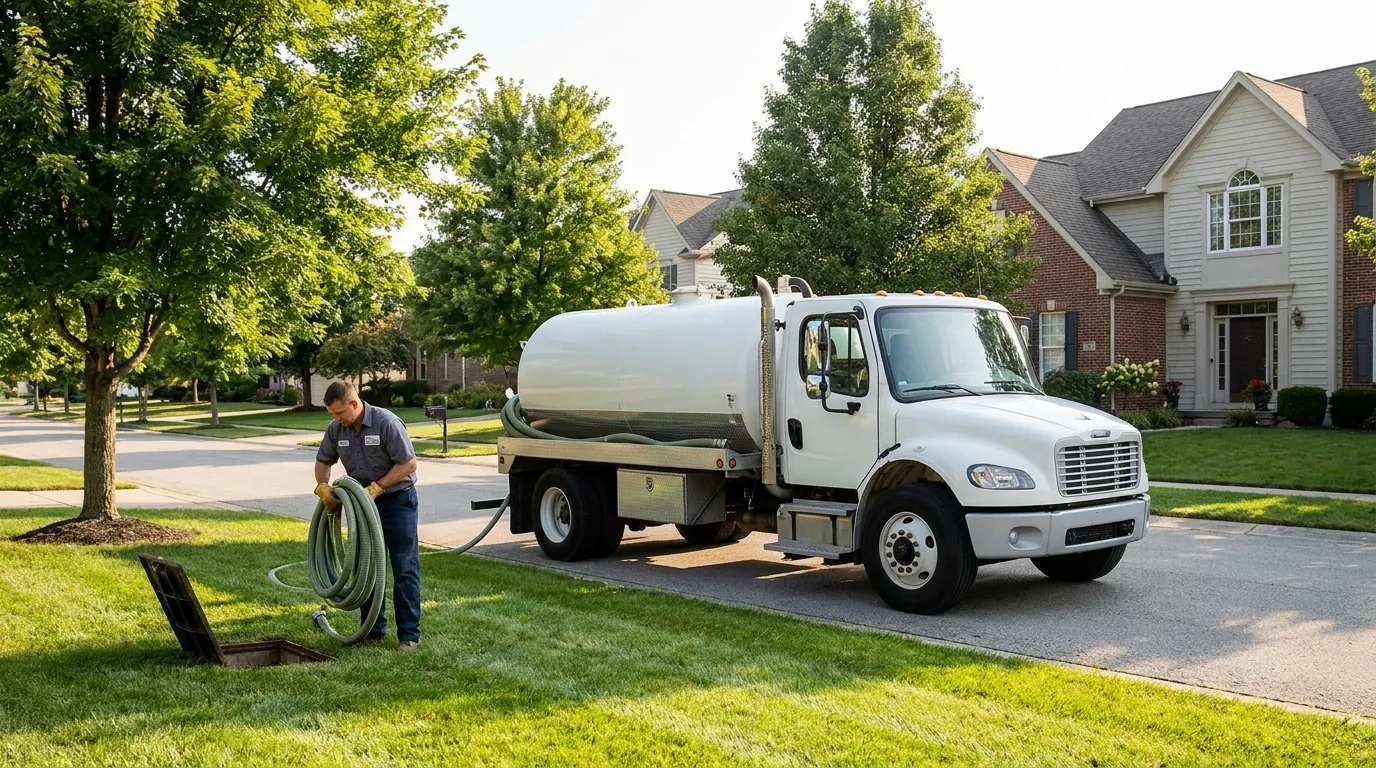
Cleaning vs. pumping
People use "pumping" and "cleaning" interchangeably, but there is a real difference. Pumping removes the liquid and the loose sludge and scum. Cleaning a septic tank goes further: it breaks up and removes the hardened, compacted sludge that settles and cements to the bottom over years of use. That layer keeps building even when a tank is pumped on schedule, and eventually it steals working volume from the tank.
Cleaning of the septic tank matters most for older systems, tanks that have gone a long time between visits, and homes where previous service only skimmed the liquid. If your tank fills up faster than it used to, or a recent pumping didn't seem to help for long, hardened buildup is often the reason.
Cleaning a septic tank pairs well with a septic system inspection, since an emptied, cleaned tank shows its baffles and walls clearly. Regular septic tank pumping afterward keeps buildup from returning as quickly.
How we clean a septic tank
Cleaning a septic tank in Carmel typically follows these steps.
-
Pump the tank down
We first remove the liquid and loose solids so we can reach the compacted layer underneath.
-
Break up hardened sludge
Using water and agitation, we loosen the cemented sludge on the tank floor and along the walls that ordinary pumping leaves behind.
-
Remove all contents
We vacuum out the loosened material from every compartment until the tank is genuinely empty rather than just drained of liquid.
-
Inspect the clean tank
With the walls exposed, we check baffles, seams, and the outlet for cracks and corrosion — the failure points worth catching early.
-
Reseal and advise
We close the access lids, backfill, and recommend a maintenance interval so buildup doesn't return this quickly.
Why Carmel tanks need it
In Carmel's clay-loam soils, drain fields accept effluent slowly, especially through the wet springs that are common here. When a field is sluggish, liquid backs up in the tank and solids get more time to settle and compact. Over several years that compaction can reduce a tank's usable capacity noticeably, which is why cleaning — not just pumping — becomes worthwhile for many local homes.
Households that run garbage disposals heavily, do a lot of laundry, or have had irregular service are the most likely to benefit from a full clean. If you're on a lower-lying lot where the ground stays wet, buildup tends to happen faster. A clean tank going into a freeze-thaw winter also has the most capacity to handle stress, which reduces the odds of a cold-weather backup and a call to our septic emergency service.
Schedule a tank cleaning
If your tank fills faster than it should or hasn't had a deep clean in years, we can remove the buildup that routine pumping leaves behind.
Cleaning service across Carmel and nearby towns.
Frequently asked questions
What's the difference between cleaning and pumping?
Pumping removes liquid and loose solids. Cleaning a septic tank also breaks up and removes the hardened sludge cemented to the bottom and walls, which pumping alone leaves behind. Cleaning restores more of the tank's working volume.
How do I know if my tank needs a full cleaning?
If the tank fills up faster than it used to, a recent pumping didn't hold long, or it's been many years since a thorough service, hardened buildup is likely. A measurement during the visit confirms it.
How often should a septic tank be cleaned?
Not every visit needs a deep clean, but tanks that see heavy use or long gaps benefit periodically. We recommend an interval based on how quickly solids accumulate in your specific system.
Will cleaning help my slow drains?
If slow drains come from a tank that's overfull with compacted solids, cleaning helps. If the drain field itself is saturated, cleaning won't be enough on its own and we'd recommend drain field service.