Septic Tank Pumping in Carmel, IN
Septic tank pumping service in Carmel, IN. We remove sludge and scum from your tank on a schedule matched to Carmel's clay-loam soils and wet springs.
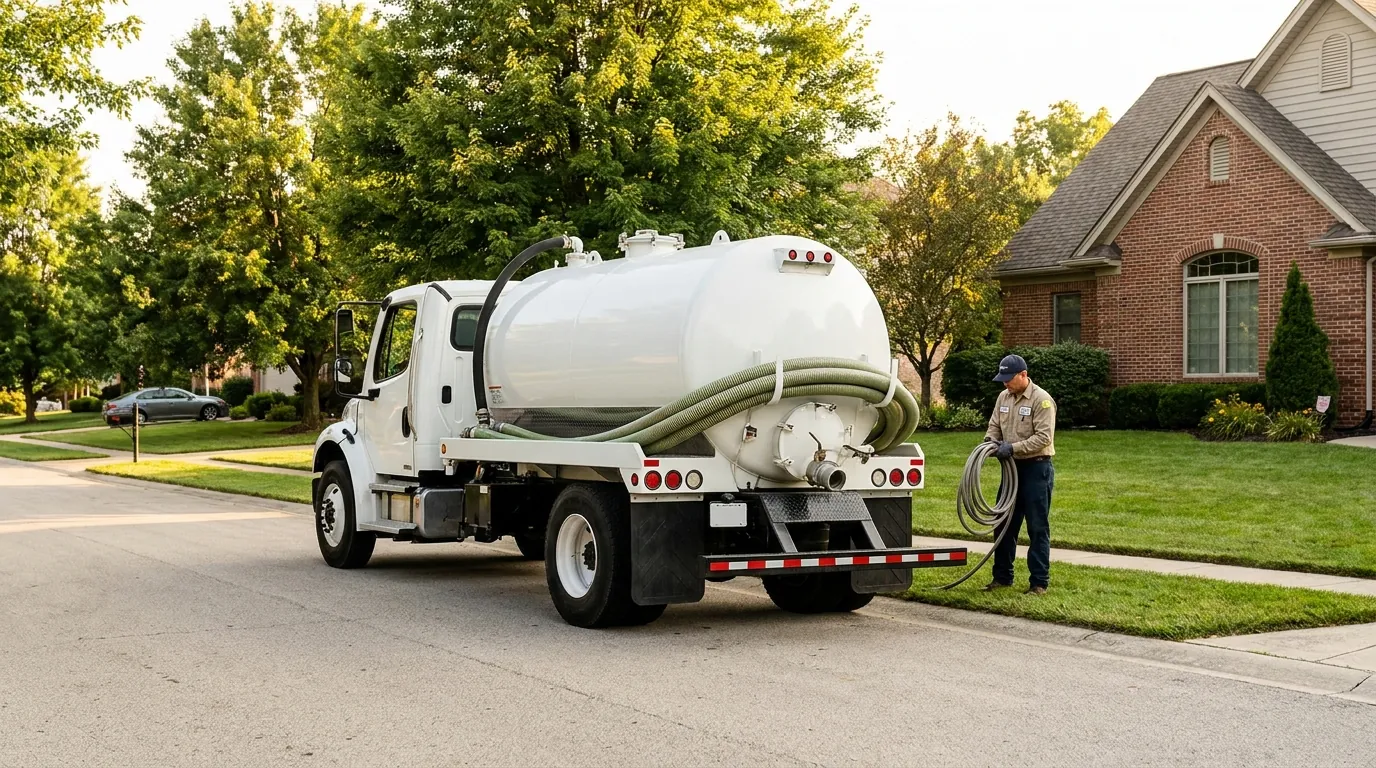
Why pumping matters here
Every septic tank fills with two things it cannot break down on its own: a bottom layer of settled sludge and a floating layer of scum. Pumping removes both before they migrate out toward your drain field. In Carmel, the clay-loam soils that dominate this part of Hamilton County drain slowly, so a system that gets neglected pushes solids into a field that is already working near its limit. Once solids reach the field, the damage is expensive and often permanent.
This page covers our septic tank pumping service: what happens on the visit, how often Carmel homes typically need it, and how local soil and weather change the schedule. If you are seeing slow drains, gurgling, or standing water over the tank, those are signals the tank is due — and worth acting on before a backup reaches the house.
Regular pumping is the single most cost-effective thing you can do for a septic system. It is far cheaper than a drain field service call or a full field replacement, and it gives us a chance to spot small problems early during a routine septic system inspection.
What a pumping visit involves
A typical residential pumping call in Carmel follows these steps.
-
Locate and open the tank
We find the tank and uncover the access lids. Many Carmel homes have risers at grade; older properties may have lids buried under a few inches of soil that we dig out by hand.
-
Measure the sludge and scum layers
Before pumping, we check how full the tank actually is. Those measurements tell us whether your current interval is right or should be adjusted.
-
Pump both compartments
We vacuum out the full contents — liquid, sludge, and scum — from every compartment. Skipping the far compartment is a common shortcut that leaves solids behind.
-
Inspect baffles and walls
With the tank empty, we look at the inlet and outlet baffles, the tank walls, and the liquid level line for cracks, corrosion, or signs the field is backing up.
-
Backfill and note the next interval
We reseal the lids, backfill, and give you a recommended date for the next visit based on what we measured and how many people live in the home.
How Carmel soil and weather change the job
Carmel's clay-loam ground holds water. In a wet Indiana spring, the soil around a drain field can stay saturated for weeks, which raises the effective water table and slows how fast the field accepts effluent. When that happens, the tank backs up sooner because the liquid has nowhere to go. Homes on lower ground or near the White River corridor feel this first, and they often need pumping on a shorter cycle than a house on well-drained higher ground.
Freeze-thaw winters add a second wrinkle. Frost can heave shallow lids and stress pipe connections, and a tank that is overdue going into a hard freeze is more likely to back up when everything else is stressed. We generally suggest pumping in late summer or early fall so your system heads into winter with maximum capacity. For a deeper look at frequency, see our guide on how often to pump a septic tank in Carmel.
Ready to schedule pumping?
Tell us your household size and roughly when the tank was last pumped, and we will recommend a visit that fits your Carmel property.
Serving Carmel and nearby Hamilton and Boone County towns.
Frequently asked questions
How often should a Carmel home pump its septic tank?
Most households here fall in the three-to-five-year range, but slow-draining clay-loam soil and a full house can shorten that. The measurements we take during a visit give you a schedule based on your actual usage rather than a guess.
What are the warning signs my tank is due?
Slow drains throughout the house, gurgling toilets, sewage odors near the tank, and greener or soggy grass over the drain field all point to a full or failing tank. If you notice these, schedule sooner rather than later.
Does pumping fix a backed-up drain field?
Pumping relieves an immediate backup and buys time, but if the field itself is saturated or failing, the problem returns. In that case we recommend a drain field service visit to diagnose the underlying issue.
Do you pump both compartments of the tank?
Yes. We remove the contents of every compartment. Leaving the second compartment un-pumped is a common shortcut that lets solids carry over toward the outlet and the field.
How much does septic tank pumping cost in Carmel?
Price depends on tank size, how much sludge has accumulated, and access. We walk through the drivers in our article on septic tank pumping cost in Carmel so you know what to expect before we arrive.